BIOGRAPHY
“Art is the coherent expression of personality.” – John Thornton

“Painting a Life” essay by David B. Boyce, 2004
From his first body of paintings in the early 1960’s, John Thornton has considered and employed the formal aesthetic concerns of color, line, form, space, and surface. But, over the course of his career to the present day, he has sought equally to create abstract art in which the viewer can perceive something of the artist’s personality. It is this quality that has always attracted and held Thornton’s attention to certain artist’s work, and one he deems essential for his own.
Initially this may sound like a difficult feat to pull off effectively, but consider the value of how much can be determined about someone when listening to how he or she talks. Syntax, word choice, use of pauses, voacl inflection, expression and body language – all of these attendant elements of speech – provide an attentive listener with information that can deepen the meaning and view point of the speaker’s words. Learning something of an artist’s personality from viewing art, especially from a mode of artistic expression that may be challenging, is a parallel experience.
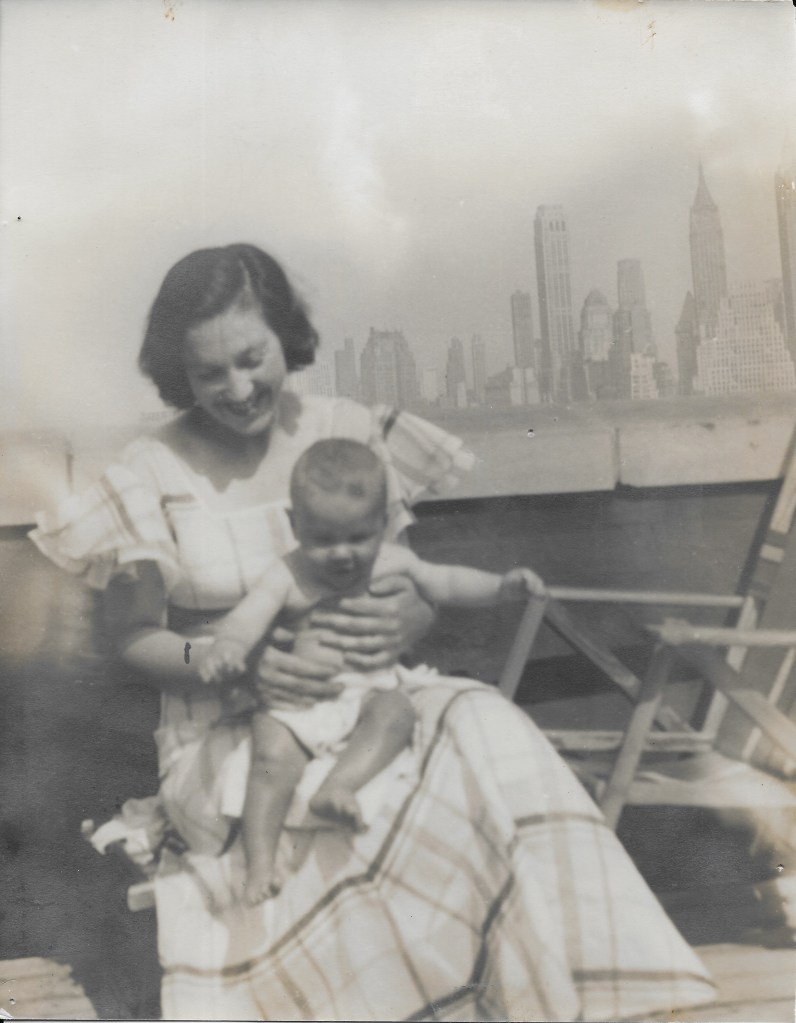
John Thornton was almost constantly exposed to art in his childhood. His father was a dealer in pre-Columbian art and his mother was an educator who eventually worked with the New York City school system, developing a collaborative vocational art program between public schools and art museums. Young John often accompanied her on museum forays, looking at everything and, more importantly, learning how to see.
[at right: John and his mother, Dorothy, at 141 Columbia Heights, Brooklyn in 1934]
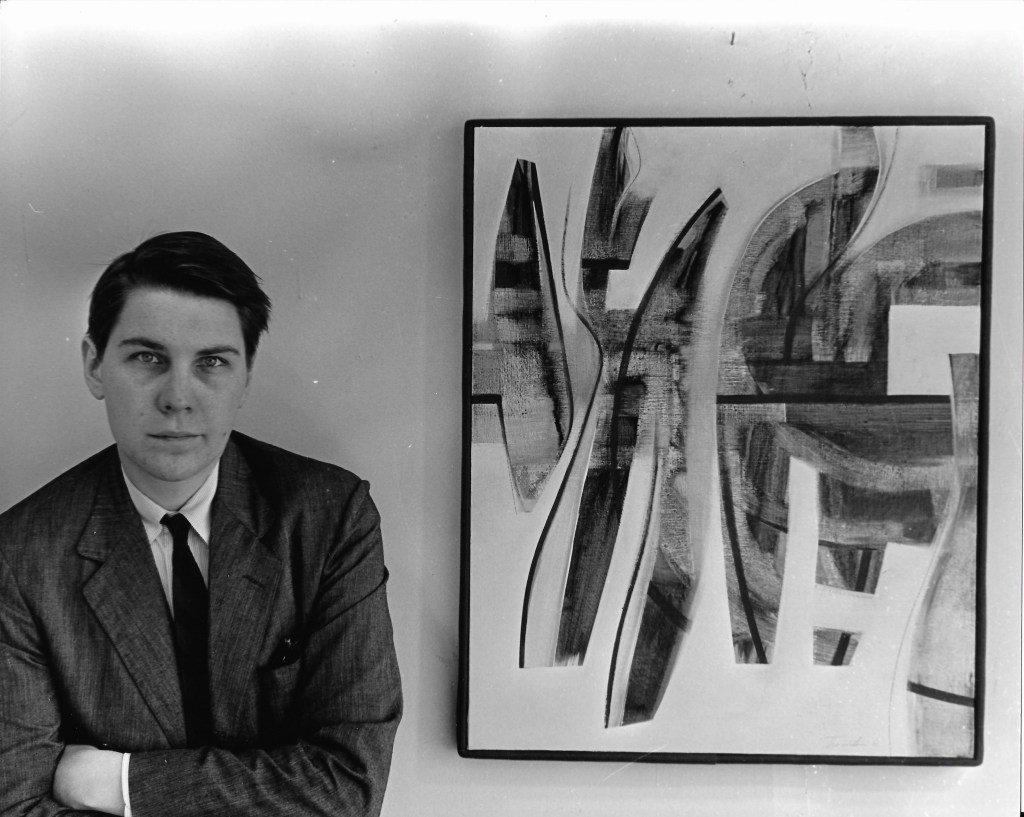
Toward the end of his college years at Princeton University in the mid-1950’s, Thornton drew and published scores of New Yorker magazine-type cartoons for college periodicals while studying mechanical engineering and industrial design. It was in art and art history classes that Thornton first explored and analyzed abstraction under the tutelage of William Seitz, an art historian and painter who later became a renowned curator at the Museum of Modern Art. Seitz was a practitioner and devotee of Abstract Expressionism, and fluently conversant with contemporary art, especially with what was termed The New York School. His classroom discussions and philosophizing made a strong impact on the future painter.
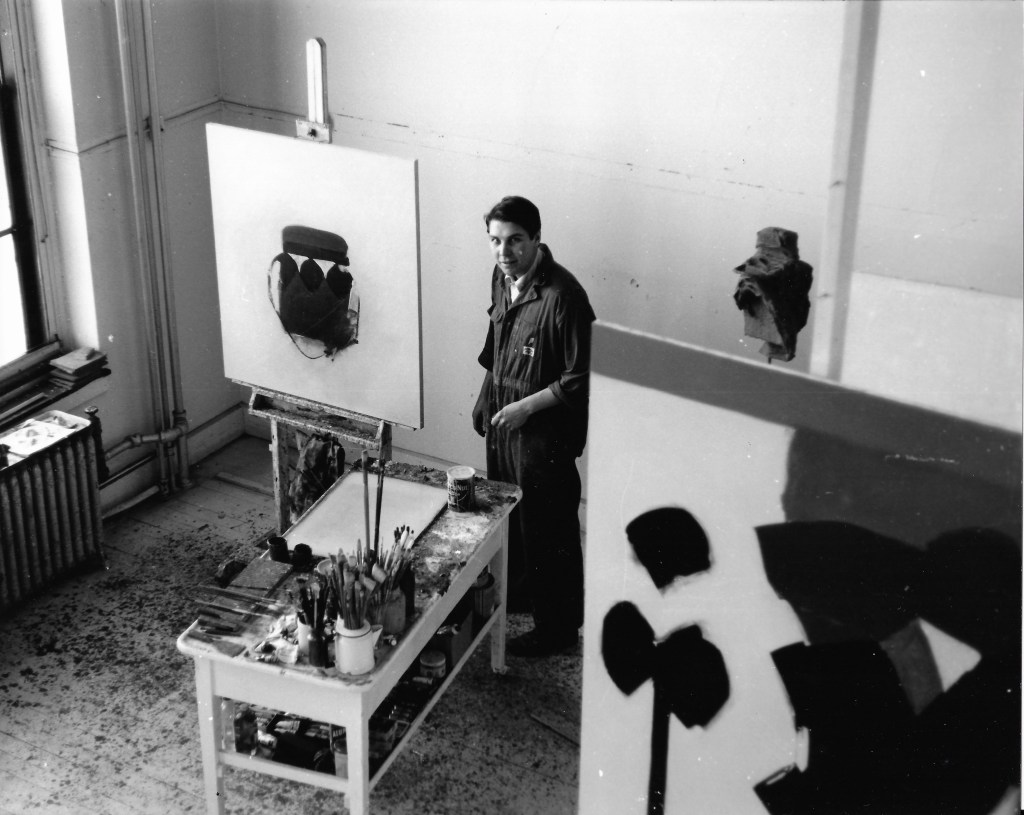
After his graduation in 1955, Thornton worked as an artist and designer for several leading New York industrial design firms while making his first serious body of paintings. A studio he obtained on Madison Avenue permitted easy access to the city’s midtown contemporary galleries, which he prowled to absorb then-current art practices and emerging trends. But it was principally from the tenets of Abstract Expressionism, which he had learned from Seitz, that Thornton developed his debut body of work.
These paintings were influenced in large part by the work of European émigré Arshile Gorky, and others of the movement’s acknowledged leaders, such as Willem de Kooning and later Philip Guston. But these early works of Thornton’s served more as opportunities to learn about the act of painting. In emulating and synthesizing stylistic qualities he admired in certain Abstract Expressionists, Thornton was getting the basics. The sensuality of laying down paint, of getting inside the nuances of its lusciously tactile qualities, does not in these works feel as highly prioritized as the artist’s emphasis on drawing and description.
They appear to tell more than they show, which developed from Thornton’s cartooning, his training as a designer, and a personal artistic strength that corresponded to what he admired in Gorky’s work. His ability to effectively reconcile formal concerns of painting with those of drawing, and to reveal an individual stamp of personal revelation, would grow increasingly with maturity, and in later series. He first exhibited at the Nordness Gallery in manhattan in 1961.
A move to Boston in 1962 with his wife and new daughter, and a job teaching art at the Massachusetts College of Art, led to finding a studio on the Fenway. Thornton’s second painting phase took a reductive turn away from the splashy gestural emotionalism of Abstract Expressionism to a subtler, more minimal approach to making images. It was also a step closer to finding his own voice.
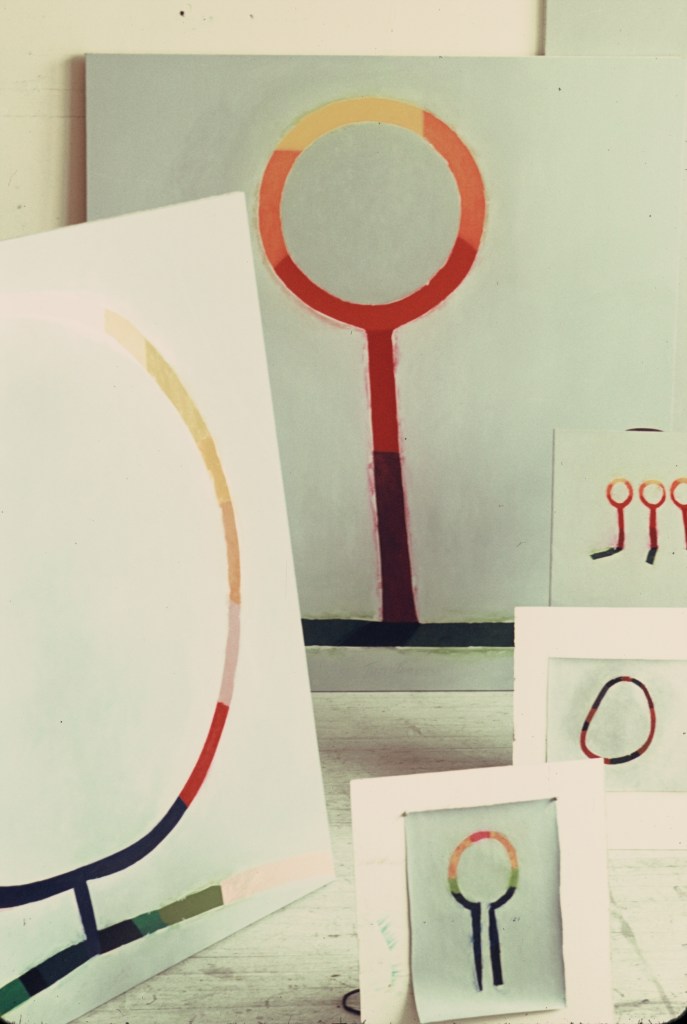
Still centrally located within the picture plane, his forms became linear while their references became figurative. They captured an essence Thornton refers to as “icons that stood for a presence, like a person.” Neutral-colored over-painted silery-gray grounds that acted as fields of containment gripped and held the simplified symbols of ribbon linearity and their internal prism sequences of color. Trees, people, elements of interiors and exteriors of houses, and everyday objects were isolated in those neutral fields, focusing viewer perception on their structural forms, as well as the meanings and emotional associations of their colors.
In this way, Thornton injected personal yet universal (if somewhat existential) figurative subject matter into his paintings at a time when the newest, loudest, and hottest trend, epitomized by Pop Art, had recently forced a reassessment of the banal and the everyday as source matter for art. Having already exhibited in one-man shows at two notable Boston galleries, and in group shows at the De Crodova Museum and the Institute of Contemporary Art, Thornton’s work was selected in 1967 by Sue M. Thurman, director of Boston’s ICA, for a month-long two-person exhibit with artist Robert Hamilton.
The show’s catalog included an essay by Boston Globe critic Robert Taylor, who wrote of Thornton’s work, “The reductive element in his art comprises an absolute personal control over the content, a vital difference between Thornton and minimal artists.” A small body of related sculpture also emerged from this painting phase.
It was shortly thereafter that curators from Manhattan’s prestigious Whitney Museum of American Art were considering work by national artists for their Annual Exhibition of Contemporary American Painting, and selected a tree painting of Thornton’s for inclusion.
Centered in New York as they were in the 1960’s, the principal galleries and museums showing the latest and most cutting-edge of contemporary art were exhibiting an increasing variety of genres and styles. A statement made in 1963 by Whitney Museum director, Lloyd Goodrich, still resonated with truth four years later: “This pluralistic art of ours is the fitting expression of a democratic society, free and fluid, allowing wide scope to individualism.” Thornton valued this individualism, yet was not one to jump on a bandwagon merely for the trappings of eternal success.
By this time, Thornton also had two young daughters to care for and was more than reluctant to leave Boston. Sadly, the artist never saw his painting hanging in the Whitney Museum, in the company of those by such revered predecessors as Newman, Frankenthaler, Gottlieb, de Kooning, Albers, O’Keeffe, and Motherwell, or alongside those by such highly touted contemporaries as Jasper Johns, Ellsworth Kelly, Frank Stella, Cy Twombly, and Andy Warhol.
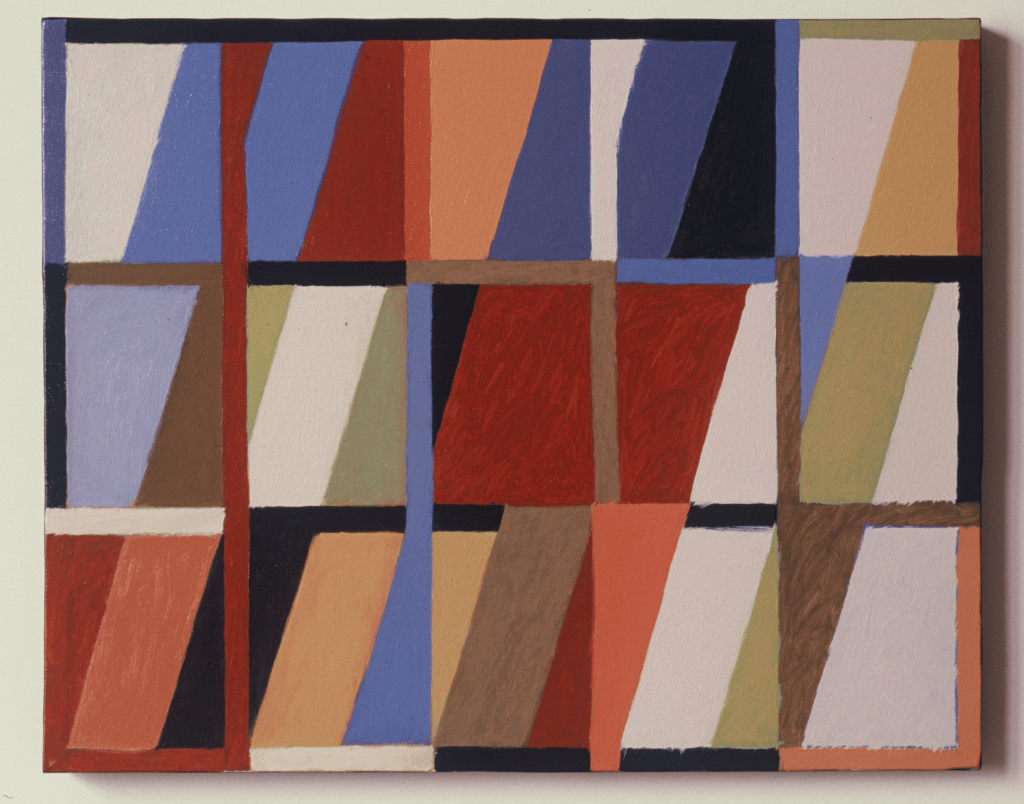
The 1970s would see further changes in Thornton’s work. After a brief stint constructing several large-scale outdoor sculptures, which were ultimately unsatisfying to his expressive needs and lacked the immediacy of visual realization he felt painting provided, Thornton began a lengthy series of grid paintings in 1973 to which he still returns from time to time. They developed in several directions and in subsets as investigations and permutations of color interaction, but with a strongly intuitive and personally idiosyncratic judgement at work.
He left them in the latter part of decade, feeling their lack of emotional engagement was something with which he could no longer cope, but something about them called him back repeatedly. He began a series during 1979 that resulted in 32 paintings using the same size and format, called the Goldberg Variations. In these, he allowed himself to improvisationally select and build almost lyrically narrative color arrangements, in a manner not unlike a Baroque composer. He continues to explore their possibilities, with their given frameworks but endlessly adaptable capacity for variation.
As is its wont, life asserted its own dictates, and in the decade’s waning years Thornton and his wife ended what had become a deteriorating marriage. It was not long, however, before he met and married his present wife and began a new family. on a visit to New Bedford in 1983, and having previously restored or renovated homes and spaces, he became intrigued with a dilapidated carriage house behind the Rotch House, and after a year of thorough rehabilitation, the residence was ready for the Thornton family.
Ensconced in this new home and studio, the birth of a son in 1986 prompted the artist into a new phase of paintings he called the Vinnie’s Ball series. They employ a new set of reference to the mystery and Surrealism of de Chirico, Magritte, and Devaux, and, given their inspiration and impetus, possess a childlike whimsicality in their rich pastel colorations and flat geometric forms that evoke children’s toys and playthings. Perhaps not surprisingly, they also hark back to the simplicity of the linear figurative work Thornton made after breaking with his early ventures in Abstract Expressionism.
During the 1990’s and early years of the new millennium, Thornton continued to paint, and explore more finitely, within phases he had previously labored. He was employed as na Associate Designer with the Preservation Partnership in new Bedford, was from 1992 to 1996 a visiting artist at the Rhode Island School of Design in Providence, and operated his own business as a commercial photographer over the course of the century’s last decade.
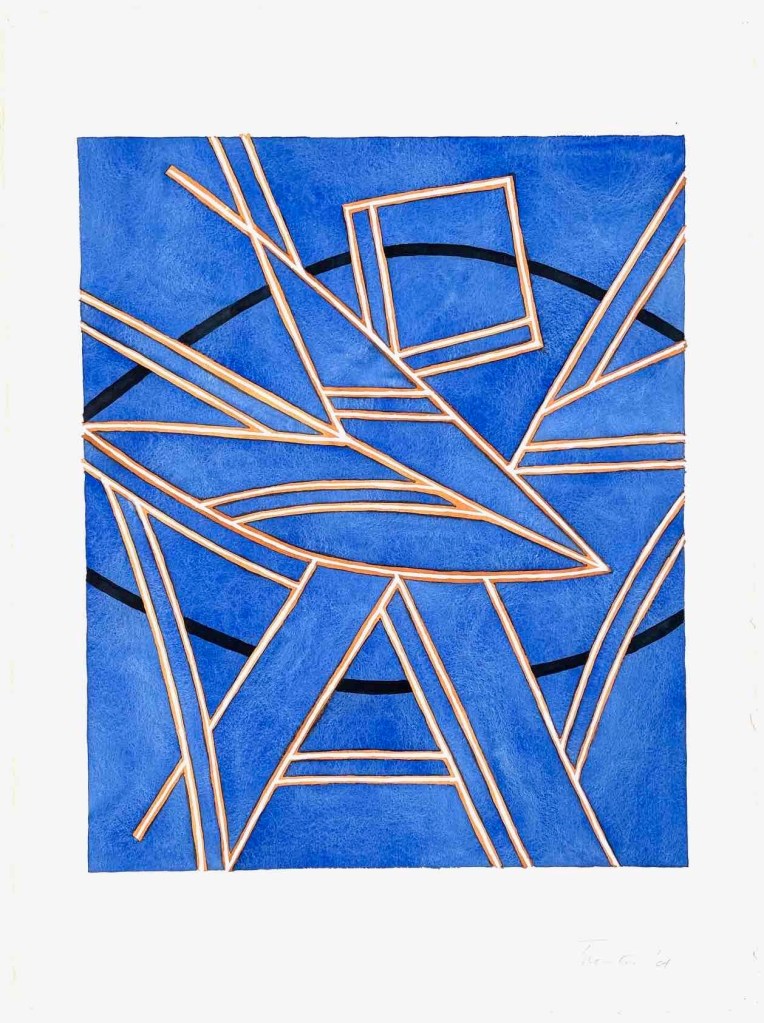
Thornton also concentrated on several series of watercolors, a medium he had used throughout his career. More intimate than oil painting because of its delicacy, watercolor is particularly effective in creating veils of fragile color that, nevertheless, can require exceptional patience, control, and expert application technique to be effective. For what he deemed necessary in his abstractions with regard to showing subtly colored and textured passages, Thornton had long before risen to the demands of the medium.
Having always been a museum-goer with a broad array of interests, Thornton had a particular interest in Acoma and Mimbres pottery of the southwest. When living in Boston, and with some regularity, he had taken his daughters on museum and gallery visits, and continued to do so, although with less frequency, when the children of his second family were old enough to be interested. In the spring of 2003, he and son Charlie went to see an exhibition of Mimbres pottery at Harvard’s Peabody Museum of Archeology and Ethnography in Cambridge. The intricate yet primal designs and patterns painted on their beautifully hand-smoothed surfaces triggered memories and inspired new ideas. Delving into a fresh body of paintings, the Constellation Series was born.
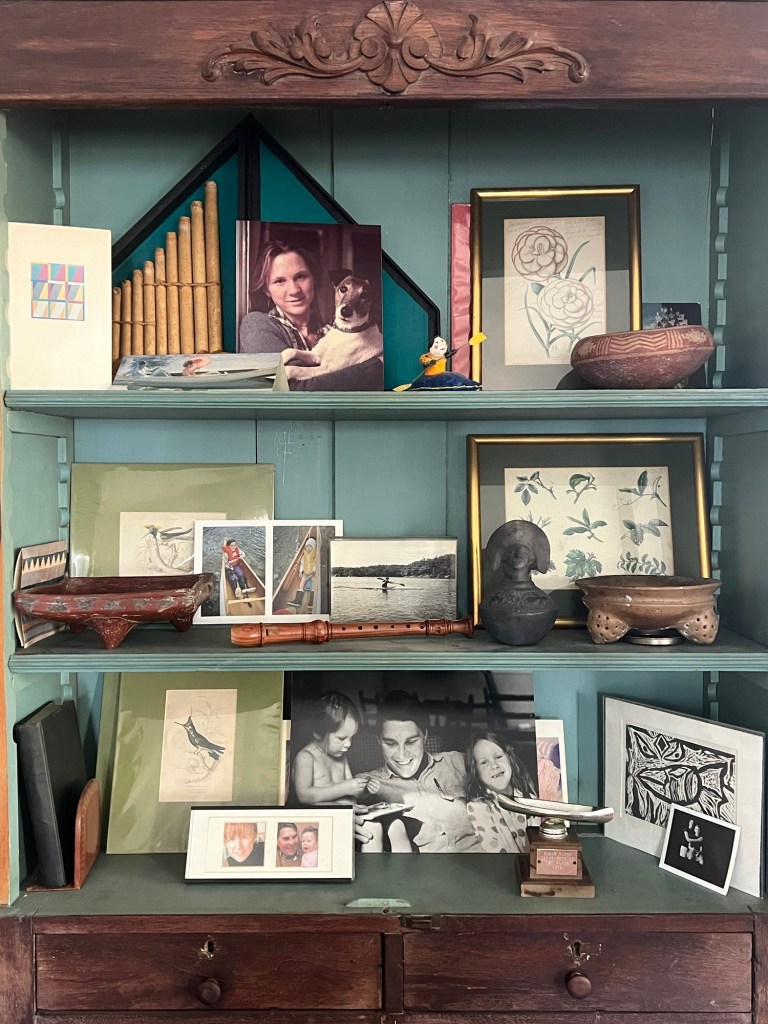
Like star maps of a night sky, this obvious association readily gives way to more layered and complex possibilities. Thornton employs a limited vocabulary of fundamentals – three colors, flat surfaces, little or no illusionary space – to create an emormous range of evocative canvases. Their linear configurations can appear ambiguous, but when seen in series they also refer to earlier compositions reduced to their essential elements. A careful inspection reveals the artist’s ongoing concern for the “icon image as presence,” the childlike playfulness with basic geometric forms, and an intuitive use of diminishment that zeroes in on the “thing-ness” of his subject.
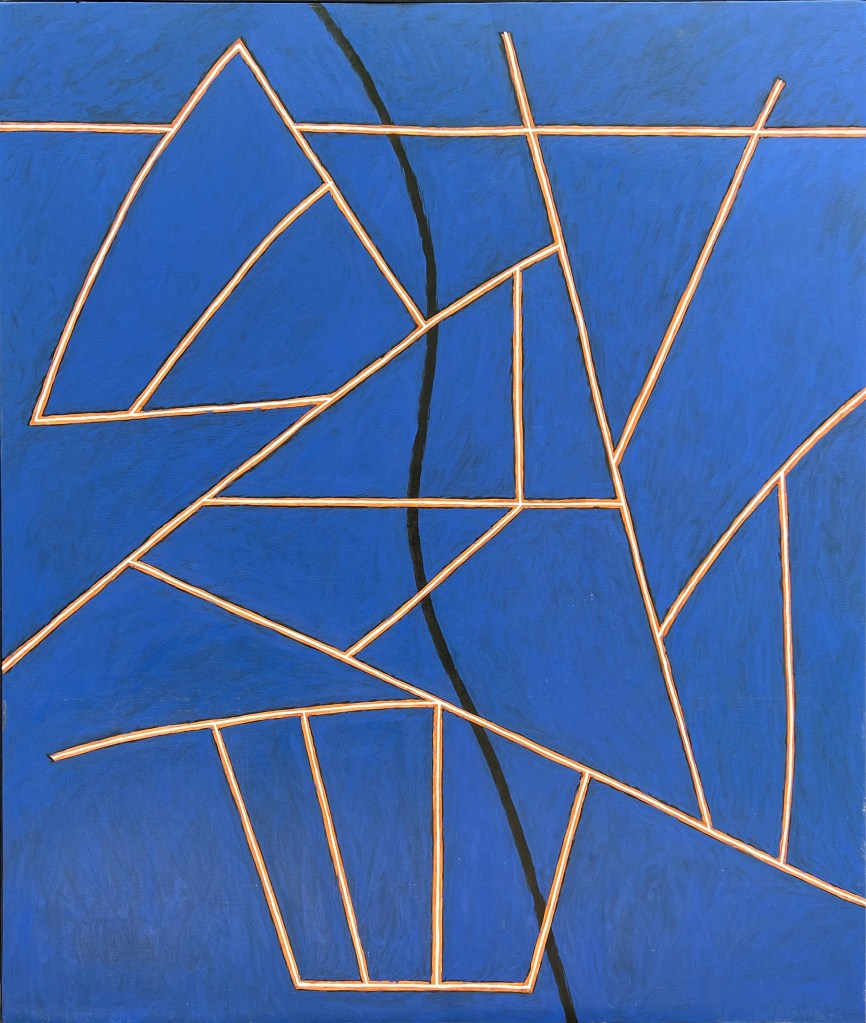
Almost by themselves, the paintings of this ongoing series serve as a collective retrospective survey of Thornton’s themes, interests, and artistic approaches. Whether consciously or not, the artist has remained true and faithful in his maturity to that which has always compelled him to make his art.
At left: “A River” 2004, oil on canvas
PUBLICATIONS
- UMass TORCH “John Havens Thornton: New Bedford Artist at Star Store Gallery” October 2016
- WHITEHOT MAGAZINE “On the paintings of John Havens Thornton” April 2016
- WHITEHOT MAGAZINE “John Havens Thornton New York Show” July 2015
- Bienvenu Steinberg & C Gallery “Roger Mandle presents John Havens Thornton” July 2015
CURRICULUM VITAE
Selected Biography
1933 Born in Mexico City, Mexico
1954-55 Studied painting with William Seitz at Princeton University
1955 BSE in Mechanical Engineering from Princeton University
1957 Studied painting with Ralston Crawford, Arts Student League, New York, NY
1958 Studied painting with Robert Phillip, National Academy of Design, New York, NY
1955-59 Worked as an Industrial Designer
1963-84 Associate Professor of Art, Massachusetts College of Art, Boston, MA
1963-70 Stage Designer for the Theatre Company of Boston
1973-78 Art Educator at the DeCordova Museum School, Lincoln, MA, The University of Massachusetts Boston, and the Danforth Museum School, Framingham, MA
1984 Moved residence to New Bedford, MA
1987-93 Associate Designer for The Preservation Partnership, New Bedford MA
1992-96 Visiting Artist, Rhode Island School of Design, Providence, RI
1993-98 Operated business as John Havens Thornton Photography – Commercial, Architectural, and Still Life
2021 Died, New Bedford, MA
One-Person Exhibitions
1961 Nordness Gallery, New York, NY
1963 Stanhope Gallery, Boston, MA
1964 Ward-Nasse Gallery, Boston, MA
1970 The School of Art, Museum of Fine Art, Boston, MA
1971 Massachusetts College of Art, Boston, MA
1976 “John Thornton Paintings/ 1967-1972” Hildreth Gallery, Nasson College, Springvale, ME
1977 Bromfield Gallery, Boston, MA
1978 “John Thornton Paintings” Bridgewater State College, Bridgewater, MA
1979 Rose Art Museum, Brandeis University, Waltham, MA
1981 “John Havens Thornton – Recent Paintings” Clark Gallery, Lincoln, MA
1995 “John Havens Thornton Paintings” Dartmouth Gallery, Dartmouth Town Hall, Dartmouth, MA
2004 “John Thornton Paintings: A Retrospective” New Bedford Art Museum, New Bedford, MA. Catalog Link
2015 “Roger Mandle presents John Havens Thornton” Jose Bienvenu Gallery, New York, NY
2016 “Vertical/ Horizontal/ Diagonal” CVPA New Bedford
2024 “John Havens Thornton” Vallots Auctioneers, Providence, RI
Two-Person Exhibitions
1967 “Robert Hamilton/John Havens Thornton – Selected New Paintings,” Institute of Contemporary Art, Boston, MA
2010 “Line + Relation”, An Exhibit of John and Charles Thornton Gelb Gallery, Phillips Academy, Andover, MA
Group Exhibitions
1963 DeCordova Museum, Lincoln, MA
1964 New England Contemporary Artists, Boston, MA
1965 Mead Paper Company New England Artists, Boston, MA, Chase Manhattan Bank Collection, Boston, MA
1966 Art in Embassies, U.S. Information Agency Program, Boston, MA
1967 “Annual Exhibition of Contemporary American Paintings,” Whitney Museum of American Art, New York, NY. Catalog link
1969 Boston Now, Boston, MA
1970 Brandeis University, Waltham, MA
1976 Cutler, Staviridis Gallery, Boston, MA
1987 DeCordova Museum, Lincoln, MA
1993 “Landscape as Metaphor: The Transcendental Vision,” guest curated by Dorothy Abbott Thompson, Fitchburg Art Museum, Fitchburg, MA, then travelled in 1994 to the Newport Art Museum, Newport, RI, and the Farnsworth Art Museum in Rockland, ME
1999 “Triennial,” Fuller Museum of Art, Brockton, MA
2000 “Visual Memoirs,” curated by Carl Belz, Rose Art Museum, Brandeis University, Waltham, MA
2011 “Inaugural Show” Dedee Shattuck Gallery, Westport, MA
2011 “John Havens Thornton and Patricia Coomey Thornton” Dedee Shattuck Gallery, Westport, MA
2012, 2013 “Small Works” Dedee Shattuck Gallery, Westport, MA
 John Havens Thornton